Hur man skriver en professionell faktura: Steg-för-steg-faktureringsguide
Vad är en faktura och varför behöver du den?
En faktura är ett juridiskt bindande finansiellt dokument som utfärdas av en säljare (som en frilansare eller ett litet företag) till en köpare. Den beskriver de produkter eller tjänster som tillhandahålls, kvantiteterna, de överenskomna priserna och betalningsvillkoren. Fakturor tjänar flera syften: de begär betalning från kunder, fungerar som ett register för skatte- och revisionsändamål och hjälper till att spåra företagets intäktsströmmar.
Nyckelkomponenter i en professionell faktura
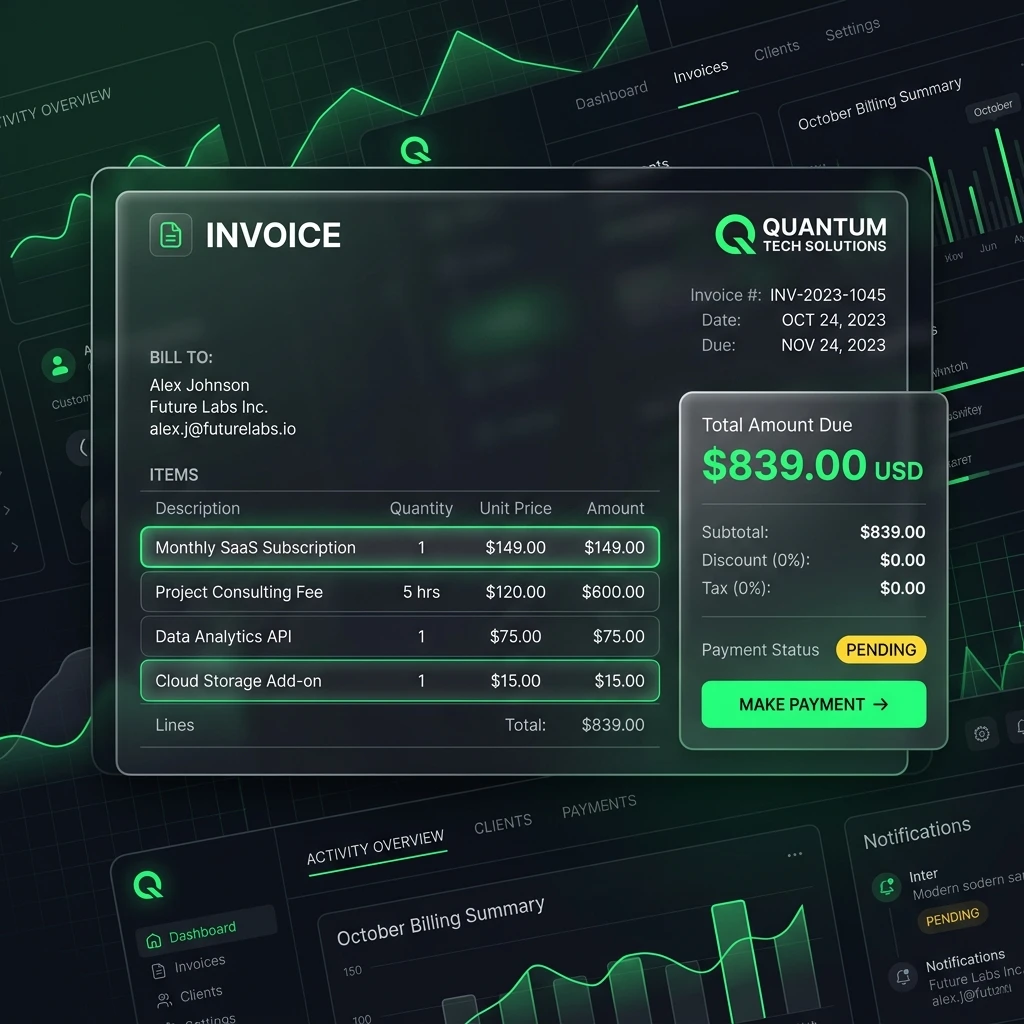
För att säkerställa att dina fakturor är lagliga och ser professionella ut måste du inkludera en standarduppsättning av element: ett unikt fakturanummer som referens, utfärdande och förfallodatum, fullständig kontaktinformation för både dig och din kund, en specificerad lista över produkter eller tjänster med prissättning och dina betalningsuppgifter.
Save time on administrative tasks
Automate calculations, tax rates, and client details instantly.
Hur du strukturerar din faktureringsinformation
Börja med ditt företags varumärke: placera din logotyp längst upp till vänster eller uppe till höger för att göra ett starkt intryck. Under det skriver du "FAKTURA" i fet stil, följt av ditt företagsnamn, e-post, telefon och fysisk adress. Se till att din kunds faktureringsinformation är tydligt grupperad under rubriken "Faktur till" och anger deras företagsnamn, e-postadress och adress.
Ställa in tydliga betalningsvillkor och instruktioner
Specificera betalningsförväntningar för att förhindra inkassofriktion. Ange dina betalningsvillkor (t.ex. Net 15, Net 30 eller "Förfaller vid kvittot") tydligt. Ange alltid bankdirigeringsnummer, IBAN-uppgifter eller direktbetalningsplattformslänkar för att göra det så enkelt som möjligt för kunder att skicka pengar.
Skapa din första faktura på 30 sekunder
Istället för att manuellt sammanställa fakturor i Excel eller Word kan du använda vår 100% kostnadsfria fakturagenerator. Ange helt enkelt dina företagsuppgifter, lägg till din kunds adress, lista dina servicerader, ställ in skattesatserna och ladda ner en ren, högupplöst PDF direkt med noll plattformsmärkning.