Stima vs fattura vs preventivo: quando utilizzare quale?
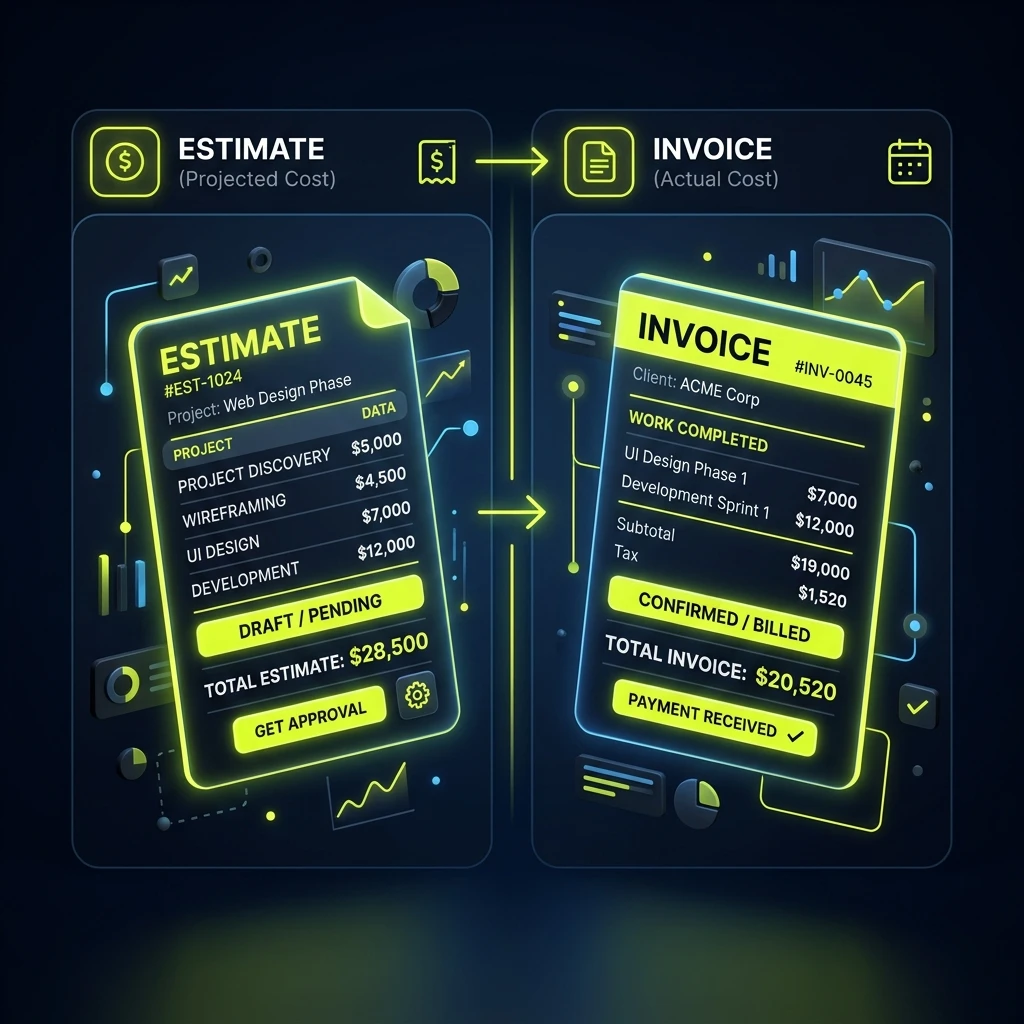
Definizione di preventivi, stime e fatture
Molti liberi professionisti e proprietari di piccole imprese utilizzano preventivi, stime e fatture in modo intercambiabile, ma hanno scopi completamente diversi nel canale di vendita. Un preventivo è un'offerta a prezzo fisso, una stima è un'ipotesi di prezzo approssimativa e una fattura è una richiesta vincolante di pagamento una volta eseguiti i servizi.
Le differenze legali e finanziarie sono esplose
Un preventivo è legalmente vincolante una volta accettato dal cliente, il che significa che non è possibile modificare il prezzo finale. Una stima non è vincolante e può cambiare man mano che l'ambito del progetto si espande. Una fattura è una richiesta di fatturazione formale che registra la transazione ai fini della contabilità clienti e della riscossione delle imposte.
Save time on administrative tasks
Automate calculations, tax rates, and client details instantly.
Il flusso di lavoro del ciclo di vita del progetto: dal preventivo al pagamento
La pipeline di fatturazione aziendale standard funziona come segue: in primo luogo, discutere l'ambito del progetto ed emettere una stima. In secondo luogo, una volta chiarito l'ambito del cliente, emettere un preventivo formale. In terzo luogo, una volta finalizzati i servizi o raggiunti i traguardi, converti il preventivo in una fattura per raccogliere i fondi.
Quando dovresti inviare un preventivo o una fattura?
Invia una stima nelle prime fasi delle discussioni per allinearti agli intervalli di budget. Invia una fattura SOLO dopo che il lavoro è stato completato o secondo i tempi concordati nel contratto iniziale.
Generazione di preventivi e fatture online
Utilizzando InvoiceOnlineTool, puoi facilmente attivare/disattivare i layout dei modelli per fungere da preventivi, stime o fatture. Puoi gestire le bozze direttamente dalla tua dashboard e convertire i dettagli del preventivo in strutture di fatturazione con un solo clic.